How Nourishing Meals Speak to Each of the Five Love Languages
Food is one of the oldest forms of love. Before words existed for it, humans were already offering nourishment to the people they cared about. That instinct has not gone away. It shows up in the broth simmering on the stove when someone is unwell, in the deliberate absence of phones at the dinner table, in the careful folding of a lunch note inside a paper bag. The way we feed people tells them something that is often hard to say out loud.
The Heart of It
This article walks through all five love languages and shows how the meals we cook, share, and eat quietly speak each one. Whether you tend to show care through action, through words, or through presence, food fits your language naturally. Grounding each connection in whole-food and mindful-eating principles, the piece gives you practical, real-life ways to bring more intention to what you cook and how you share it.
The Five Love Languages and Where Food Naturally Fits
The concept of love languages describes five distinct ways people give and receive emotional care: words of affirmation, acts of service, receiving gifts, quality time, and physical touch. Gary Chapman introduced the framework in the early 1990s, and it has since become a widely used lens for understanding how people connect. What is striking, once you start paying attention, is that food maps onto every single one of these pathways. The kitchen is not just a place for nutrition. It is one of the most expressive spaces in the home.
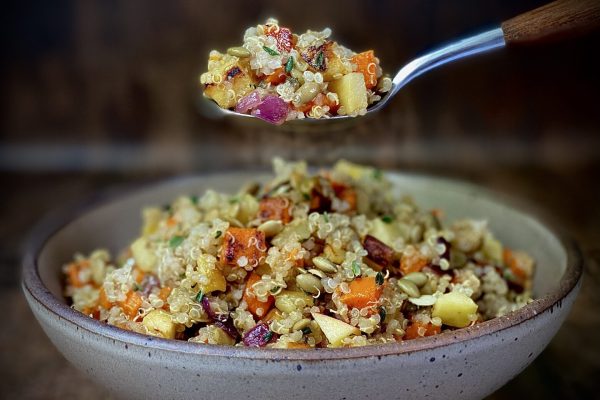
Mindful eating traditions have long recognized that how we eat matters as much as what we eat. The ritual around a meal carries emotional weight. A tahini quinoa bowl eaten in a hurry over a laptop is nutritionally similar to the same bowl served at a set table with conversation and candles. Emotionally, they are completely different experiences. That difference is where the love languages live.
Acts of Service: When the Cooking Speaks for You
For people whose primary love language is acts of service, actions carry far more weight than words. They feel cared for when someone takes something off their plate, literally or figuratively. In the kitchen, this love language is probably the easiest to express and the most underrated.
Batch-cooking a week of lunches for a busy partner. Making a pot of healing miso broth the moment someone mentions a scratchy throat. Prepping the vegetables for dinner before your housemate gets home from a long shift. These gestures do not require a grand announcement. They speak for themselves.
Whole-food cooking suits this love language particularly well because it often involves more preparation time. Soaking and cooking dried chickpeas instead of opening a can. Slow-simmering a bone broth rather than reaching for a stock cube. These are not shortcuts. They are investments of time and care, and the person receiving them usually knows it.
- Batch-cooking grains and roasted vegetables for the week so a partner has easy, nourishing meals ready without effort
- Preparing a healing broth with ginger, turmeric, and garlic the moment someone feels under the weather
- Packing a thoughtful lunch with a handwritten note tucked inside the container
- Quietly refilling the fruit bowl and keeping the fridge stocked with a partner’s favourite whole-food snacks
- Learning to cook a dish someone loves from their childhood and making it without being asked
None of these gestures require a special occasion. That is the point. Acts of service say: I noticed what you needed, and I did it.
Words of Affirmation: Saying Something True About the Meal
For people who feel most loved through words, affirmation is the thing that lands deepest. In a food context, this does not just mean complimenting the cook. It means being specific. Vague praise floats away. Specific appreciation sticks.
Instead of “this is nice,” try: “the way you seasoned the lentils this time was perfect, that little hit of lemon at the end changed the whole dish.” Instead of “good dinner,” try: “I felt genuinely looked after eating this. Thank you for making it.” The difference between those two things is enormous to someone who speaks this language.
Words of affirmation around food also work in the other direction. Asking someone to teach you a recipe, and paying genuine attention while they explain it, tells them their knowledge and effort matter to you. Texting someone mid-afternoon to say you are still thinking about the soup they made two days ago is small, but it lands with real weight. The specificity is everything. Generic praise sounds polite. Precise appreciation sounds true.
Receiving Gifts: The Thought Behind the Ingredient
Gift-oriented love languages are not really about the monetary value of the object. They are about symbolic meaning. The object says: I thought of you when I was not with you. I saw this and immediately knew it was for you.
In a food context, this can be beautifully simple. A jar of single-origin honey from a farmer’s market. A bunch of fresh herbs cut from a garden. The specific variety of apple someone mentioned they loved as a kid. A bottle of a spice blend you tracked down because they once said they could not find it. These are not extravagant. They are deliberate, and that is the difference.
For the mindful eater, food gifts land especially well when they are thoughtful about quality. Bringing someone a bag of stone-ground oats because you know they are working on their morning routine. Dropping off a jar of homemade tahini dressing. Picking up a piece of seasonal fruit at its absolute peak ripeness. The care behind the gesture is the whole message.
Quality Time: The Distraction-Free Dinner as an Act of Love
Quality time is about undivided presence. For someone who speaks this language, a shared meal where both people are on their phones is genuinely painful. The same meal, phones face-down, no background television, full attention on each other, is the whole thing. The food almost becomes secondary.
Research on the benefits of eating together without distraction is consistent. A mindful approach to eating involves slowing down and paying real attention to the sensory experience of a meal. When you apply that principle to a shared dinner, the effect becomes layered. You are not just present to the food. You are present to the person across from you.
Cooking together also counts. Choosing a new recipe and making it side by side is quality time that produces something tangible at the end. A warming stir-fry thrown together on a weeknight, both of you chopping and tasting and adjusting, is a different kind of closeness than sitting across a restaurant table. It is collaborative, sensory, and grounding all at once.
To create quality-time meals that genuinely land, a few intentional steps help:
- Set a consistent time in the week for a shared, unhurried dinner and protect it like a firm appointment
- Remove screens from the table for the full duration of the meal, without exceptions
- Choose recipes that invite both people to participate, so the cooking itself becomes the shared activity
- Ask one meaningful question at the start of the meal instead of letting conversation default to logistics and to-do lists
- Stay at the table after eating, even just for a few minutes, to let the meal flow into genuine conversation
Physical Touch: The Sensory Ritual of Shared Food
Physical touch as a love language is about closeness, warmth, and the comfort of physical proximity. Food connects to this more than most people expect, because eating is already a sensory, embodied experience.
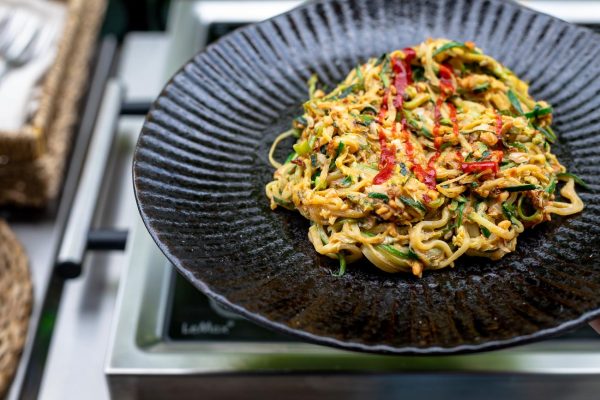
Shared plates are an expression of physical ease. Reaching across the table to offer someone a bite. Passing a dish with both hands. Sitting close enough that your shoulders touch while eating together on the couch. Making a stir-fry or a bowl dish designed to be eaten communally rather than from separate portions. These are small, tactile expressions of togetherness that say something beyond the words at the table.
The ritual of cooking carries this too. Kneading dough side by side. Taste-testing directly from the spoon and then handing it over for a second opinion. These gestures carry physical warmth that goes beyond the mechanics of preparing food. They are moments of closeness that happen to be wrapped around a meal.
How Mindful Eating Deepens Every Love Language
Mindful eating principles fit naturally across all five love languages because they share the same core: attention. Slowing down, engaging the senses, being present to the experience of the meal. When you bring that quality of attention to the way you cook and eat with others, every love language expression becomes more precise and more felt.
The acts-of-service cook who makes a healing broth becomes more intentional when they choose ingredients with care: ginger for warmth, miso for gut health, a handful of greens for vitality. The quality-time dinner becomes richer when both people are genuinely tasting and noticing the flavours in front of them. The gifted jar of honey lands more meaningfully when the giver has thought about the quality, the source, the flavour profile.
- Slow cooking methods like broths, stews, and baked dishes naturally create more presence and care in the kitchen because they require patience
- Whole-food ingredients carry inherent intentionality: choosing a real food over a processed shortcut is itself an expression of effort and consideration
- Eating without distraction heightens sensory awareness and makes any shared meal more memorable and more connected
- Inviting someone into your cooking process, rather than just handing them the finished plate, creates connection across multiple love languages at once
How Each Love Language Shows Up at Mealtimes
| Love Language | How It Shows Up in Food | A Whole-Food Example |
|---|---|---|
| Acts of Service | Cooking, prepping, and doing kitchen work without being asked | Batch-cooking a week of tahini bowls so a partner has nourishing lunches ready |
| Words of Affirmation | Specific, genuine appreciation for the food or the effort behind it | Naming exactly what made a lentil soup perfect, not just saying it was “nice” |
| Receiving Gifts | Bringing a thoughtful ingredient or food item that communicates “I thought of you” | A jar of raw honey or fresh herbs left on the counter as a quiet surprise |
| Quality Time | Shared, unhurried meals with full presence and no screens | A weekly dinner cooked together, phones away, conversation unhurried |
| Physical Touch | Shared plates, closeness at the table, eating communally | A warming stir-fry served in one bowl to share, eaten side by side |
When the Meal Is the Message
You do not have to cook elaborate food to communicate love through a meal. You just have to mean it. A pot of simple rice, cooked with care, seasoned attentively, offered at the right moment, carries as much weight as anything complicated.
The five love languages give you a useful framework for understanding not just how others feel loved, but how you naturally tend to express it. Most of us default to cooking the way we were raised to cook, for the reasons we grew up with. Understanding the love language at play helps you adapt. It helps you recognize when the person you are feeding needs a word of genuine thanks more than a second helping, or a quiet dinner more than a beautifully plated dish.
Food is relational. It always has been. The practical knowledge of whole-food cooking and the sensory attentiveness of mindful eating are tools that make your expression of care more precise. Not because nutrition and love are the same thing. Because the way we nourish people is often the closest we can get to saying exactly what we feel.
Next time you step into the kitchen for someone else, pause for a moment. Ask yourself what you are actually saying with this meal. That small shift in intention changes everything about what lands on the plate.