Nutrition Habits That Support Gut Health Throughout a Busy Week
Most people approach gut health like a weekend project. A probiotic capsule on Monday, some kimchi on Friday, a green smoothie whenever the motivation strikes. But the gut runs on daily rhythm, not occasional gestures. It responds to the patterns built across seven consecutive days, not the highlights. And that shift in thinking changes everything about how you approach food during a busy week.
Gut Check
Consistent daily habits do more for your gut than any single food or supplement ever will.
- Eating at regular times each day gives your digestive system a reliable rhythm to prepare and respond.
- Thorough chewing reduces the workload on your stomach and supports nutrient absorption further down the line.
- A varied diet rich in plant fiber and fermented foods feeds a more diverse, resilient gut microbiome week after week.
What the Gut Is Actually Asking For
Your digestive system hosts roughly 100 trillion microorganisms. This community, called the gut microbiome, plays a significant role in immune function, inflammation regulation, hormone signaling, and even mood. What keeps it functioning well is not a single superfood. It is variety, timing, and the right physical conditions for digestion to run smoothly.
This lines up with what gut health research consistently shows: daily lifestyle patterns shape digestive outcomes more than any single food choice. The gut thrives when it has regularity, adequate fiber, and enough space between meals to complete its work before the next one arrives.
How Meal Timing Sets Your Digestive Rhythm
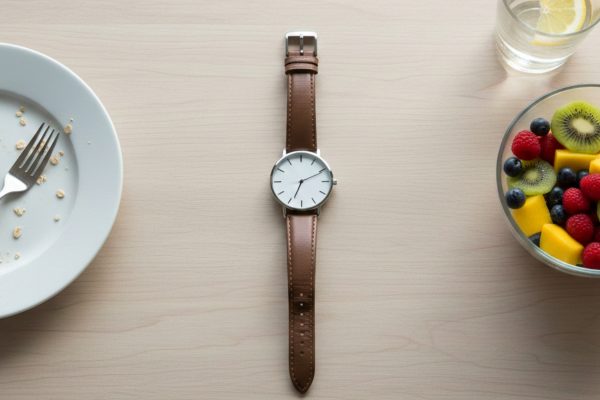
Think of your digestive system as a production line with a natural pace. When food arrives at irregular times, the line either rushes or stalls. Enzymes are released too early or too late. Bile sits idle when it should be active. The gut microbiome shifts in response to what it receives and when.
Eating at roughly consistent times each day, even just anchoring your first and last meals to a predictable window, allows your body to anticipate food. Digestion is partly anticipatory. The stomach begins preparing acid, the pancreas starts releasing enzymes, and bile begins flowing in response to signals that a meal is coming. When those signals are consistent, the whole process runs more efficiently with less effort and discomfort.
You don’t need a rigid schedule to benefit from this. A two-hour window for breakfast and a two-hour window for dinner is enough to establish a workable rhythm for most people.
The Forgotten Case for Chewing Slowly
Digestion doesn’t begin in the stomach. It begins the moment food enters your mouth. The mechanical breakdown created by your teeth and the enzymatic action of saliva handle a meaningful portion of digestion before anything reaches the stomach or small intestine.
When meals are rushed, large partially unchewed particles reach the gut. The gut then works harder to break them down, often leading to fermentation of undigested food in the colon. That fermentation produces gas and discomfort. It also shifts the microbial environment in ways that favor less beneficial bacterial strains over time.
A practical habit is to chew until the food loses all detectable texture before swallowing. It sounds unremarkable. In practice, it requires conscious effort for most people during the first week or two, before it becomes second nature. The reward is noticeable: less bloating, better satiation, and calmer digestion after meals.
Building Meals That Feed a Healthy Microbiome
Not all meals support gut health equally. The composition of what you eat shapes the microbial population in your gut over days and weeks. A diet heavy in refined carbohydrates and low in plant diversity reduces microbial variety over time. A diet built around whole plants, fermented foods, and adequate protein does the opposite.
Foods that reliably support a healthy gut environment include:
- Fermented foods like yogurt, kefir, kimchi, miso, and sauerkraut, which introduce beneficial live cultures directly into the digestive tract.
- Prebiotic vegetables like garlic, onion, leeks, and asparagus, which feed and sustain the beneficial bacteria already living in your gut.
- Legumes like lentils, chickpeas, and black beans, which are dense in both soluble and insoluble fiber.
- Whole grains like oats, barley, and brown rice, which provide resistant starch that reaches the colon largely intact and becomes fuel for beneficial bacteria.
- A wide range of vegetables and fruit, because plant diversity is one of the strongest predictors of microbiome diversity across population studies.
Adequate dietary fiber is one of the most consistently supported factors in long-term gut health. Most adults consume far below the recommended 25 to 38 grams per day, and that gap shows up in digestive function over time.
How Common Foods Stack Up for Gut Support
| Food Category | Primary Gut Benefit | Typical Fiber per Serving | Contribution Level |
|---|---|---|---|
| Fermented dairy (kefir, yogurt) | Adds live cultures directly to gut | Low (0, 1 g) | High (microbial) |
| Legumes (lentils, chickpeas) | Feeds microbiome with prebiotic fiber | High (8, 13 g) | Very high |
| Whole grains (oats, barley) | Resistant starch supports colon health | Medium (3, 6 g) | High |
| Prebiotic vegetables (garlic, leeks) | Fuels existing beneficial bacteria | Medium (2, 5 g) | High |
| Refined grains and sugary snacks | Feeds less beneficial bacterial strains | Very low (0, 1 g) | Low (limit these) |
Staying Consistent When the Week Gets Away from You
This is where most well-intentioned gut health routines collapse. Monday is manageable. By Thursday evening, the structure has dissolved because the day was long and the easiest option won. Consistency doesn’t require perfection. It requires a few reliable structures that don’t demand much from you when your energy is depleted.
Here is a realistic framework for keeping gut-friendly habits in place through a packed week:
- Anchor at least one gut-friendly meal each day. Even if lunch and dinner slip, a fiber-rich breakfast with oats, fruit, and yogurt maintains meaningful daily consistency.
- Keep prepped components in the fridge. Cooked lentils, roasted vegetables, and a batch of grains can be assembled into a satisfying bowl in five minutes with no cooking required.
- Default to a simple formula. One grain, one legume, and one or two vegetables covers fiber, protein, and microbial variety in a single meal. Rotate the ingredients and keep the structure.
- Make informed choices when eating out. A grain bowl, a legume-based salad, or a vegetable-forward dish keeps fiber intake reasonable even when you are away from your kitchen.
- Treat a difficult day as a data point, not a failure. One low-fiber day does not undo a week of consistent habits. The gut recovers faster than most people expect once the routine returns.
On the most demanding days, reaching for fast nourishing meals that still deliver fiber and protein is a practical and genuinely sound choice. The goal is not an immaculate record. It is keeping nutrient density in the picture even when circumstances make thorough cooking difficult.
When Everyday Habits Add Up to Genuine Wellbeing
Gut health is built quietly. There is no dramatic moment where everything shifts. It is the oats you had on Tuesday, the lentils from Wednesday’s lunch, the yogurt at breakfast on Thursday, and the fact that you chewed more carefully than usual on Friday. These choices compound.
A diverse, resilient gut microbiome does not develop from a single inspired week of superfoods. It develops from months of varied, fiber-rich, consistently timed meals that give the gut what it needs to maintain a stable, thriving internal environment. That might sound unglamorous. In practice, it is one of the most sustainable paths to feeling genuinely well that exists.
The payoff shows up in ways that go beyond digestion. Steadier energy throughout the day. Less bloating and discomfort after meals. A calmer relationship with hunger and fullness. And that underlying sense of being truly well-nourished, not just fed, that makes a packed week feel far more manageable than it otherwise would.
Your gut is resilient and responsive. It adapts quickly to better habits and recovers reliably from the occasional difficult day. Feed it consistently, eat with some intention, and give it the fiber and variety it depends on. The rest genuinely does take care of itself.