How Controlled Breathing Before Meals Supports Better Digestion
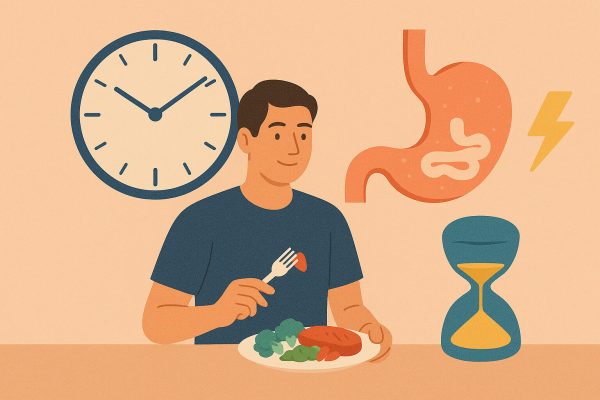
Most people sit down to eat mid-thought. A phone in one hand, a mental to-do list running in the background, maybe a stressful conversation still replaying in their head. The food arrives and the fork is moving before the body has any idea it is time to digest. That gap between your mental state and your gut readiness is exactly where a few slow breaths can change everything.
The connection between your breathing pattern and your digestive capacity is not abstract. It runs through your nervous system in a direct, physical way. Shift your nervous system state before a meal, and you shift how well your gut can actually do its job. That shift can happen in under five minutes.
Three Things to Know Before You Read On
- Eating while stressed reduces enzyme output, suppresses saliva production, and disrupts gut motility in measurable ways.
- Slow, deliberate breathing activates the parasympathetic nervous system, directly signaling your gut to prepare for a meal.
- Pairing a pre-meal breathing practice with mindful chewing and consistent meal timing builds the strongest possible digestive routine.
Your Nervous System Sets the Stage for Every Meal
Your autonomic nervous system runs two distinct modes. The sympathetic branch is fight-or-flight. The parasympathetic branch is rest-and-digest. Those are not just convenient metaphors. Your gut literally relies on parasympathetic activation to perform well.
When parasympathetic signals are running, your body increases saliva production, ramps up stomach acid, releases digestive enzymes from the pancreas, and promotes healthy movement through the intestines. This is the state your body needs to be in when food arrives. Your body’s pre-meal readiness, as the National Institute of Diabetes and Digestive and Kidney Diseases explains, begins even before food reaches your stomach, with the brain triggering saliva and enzyme release in anticipation of eating.
That anticipation phase depends entirely on your nervous system being cooperative. When you are stressed, those anticipatory signals get suppressed. The body has other priorities. Digestion gets pushed aside because, from a survival standpoint, a perceived threat in the environment matters more than breaking down a meal.
What Stress Does to Your Gut During a Meal
Eating while stressed is not just uncomfortable. It changes the chemistry of digestion in measurable ways. Cortisol, your primary stress hormone, redirects blood flow away from your digestive organs toward your muscles and heart. Less blood reaching your gut means slower enzyme activity and reduced absorption at the intestinal lining.
Gastric emptying, the rate at which your stomach moves food into the small intestine, can also become irregular under stress. Some people experience it speeding up, leading to cramping or loose stools. Others experience it slowing dramatically, causing heavy bloating after eating. Neither outcome supports good nutrient uptake.
Eating State vs. Digestive Outcome: A Side-by-Side Look
| Digestive Factor | Eating While Stressed | Eating in a Calm State |
|---|---|---|
| Saliva production | Reduced, limiting carbohydrate breakdown from the first bite | Adequate, supporting carbohydrate digestion immediately |
| Stomach acid output | Suppressed or irregular, weakening protein breakdown | Properly regulated for effective protein digestion |
| Digestive enzyme release | Reduced pancreatic output limits fat and starch absorption | Full enzyme release supports optimal nutrient uptake |
| Gut motility | Irregular, often producing bloating, cramping, or urgency | Steady, rhythmic movement processes food comfortably |
| Blood flow to digestive organs | Reduced as circulation prioritizes muscles and heart | Good blood flow supports nutrient absorption at the gut lining |
Why Breathing Is Your Fastest Route to a Calm Gut
You cannot think your way into a parasympathetic state. But you can breathe your way into one. That is because your breath is the one part of your autonomic nervous system you can consciously control. Slow it down, extend the exhale, and you directly influence your heart rate, blood pressure, and the activity of your vagus nerve.
The vagus nerve is the long, branching nerve connecting your brain to your heart, lungs, and digestive organs. When slow breathing stimulates vagal activity, the parasympathetic signal travels down into the gut. Digestive secretions increase. The muscles lining your intestines begin their rhythmic contractions. Your body opens up for the meal ahead.
Research into diaphragmatic breathing has shown measurable effects on gastric motility and autonomic nervous system balance. The mechanism is direct: your breathing pattern drives your nervous system state, and your nervous system state drives your digestive readiness. This is not a roundabout relationship. It is a clear chain of cause and effect.
A Pre-Meal Practice That Takes Under Five Minutes
You do not need a long meditation session or any special equipment. A focused three to five minutes before sitting down to eat is enough to shift your physiological state in a meaningful direction. Here is a simple structure to follow:
- Stop moving and sit down. Even pausing physical activity for sixty seconds begins to lower cortisol. Set your phone face down and push distractions out of arm’s reach.
- Breathe in for four counts through your nose. Let your belly expand first, then your chest. This is diaphragmatic breathing, and it engages the vagus nerve more effectively than shallow chest breathing.
- Hold briefly for one or two counts. This optional pause helps you stay present rather than rushing through the exercise.
- Exhale slowly for six to eight counts through your mouth. A longer exhale than inhale is what tips the balance toward parasympathetic activation. Let it be easy and unforced.
- Repeat for five to eight cycles. A breathing timer can pace your inhale and exhale intervals without requiring you to count mentally, which keeps your attention on relaxing rather than tracking numbers.
After a few rounds, most people notice something tangible. Shoulders drop. The jaw unclenches. That restless, rushing energy settles. That shift is your parasympathetic nervous system gaining the upper hand. That is the state in which your gut is primed and ready.
Chewing and Meal Timing Give This Practice More Power
Breathing before a meal primes your nervous system, but the habits you carry into the meal itself determine how long that calm state holds. Two areas matter most: how thoroughly you chew, and when you eat.
Thorough chewing is one of the most undervalued digestive tools available. Each bite broken down mechanically in your mouth means less stress on your stomach and small intestine. Research on chewing behavior suggests most people chew each bite far fewer times than needed for optimal digestion. Aiming for twenty to thirty chews per bite, depending on the food texture, keeps the process slow enough to stay aligned with the pace your gut needs after your breathing practice has set the stage.
Meal timing adds another layer of support. Eating at consistent times each day helps regulate your digestive circadian rhythm. Your gut actually anticipates meals based on your usual schedule, releasing enzymes and preparing motility patterns in advance. Irregular eating disrupts that cycle, making digestion less predictable regardless of how relaxed you are before eating.
A few habits that reinforce the calm state you create through breathing:
- Put your fork or spoon down between bites to naturally slow your eating pace
- Eat your first several bites without talking or looking at a screen, to hold onto the nervous system state you worked to create
- Drink water before your meal rather than during, to avoid diluting stomach acid at the wrong moment
- Sit in an upright, seated position rather than eating while standing or moving, which keeps digestion physically aligned
- Avoid eating within an hour of intense exercise, when your sympathetic nervous system is still running at a high level
The First Breath That Changes Your Next Meal
It is easy to treat eating as something to get through between tasks. A meal becomes a box to check rather than a process worth supporting. But your gut does not see it that way. It needs preparation: blood flow, enzyme output, the right nerve signals, the right mechanical conditions. None of that arrives automatically when you are mid-stress or mid-scroll.
The few slow breaths you take before eating are not a wellness ritual layered on top of a meal. They are a physiological handoff. You are telling your body, in the only language it responds to immediately, that the threat has passed and the meal can begin. Your nervous system listens. Your gut follows.
Five minutes before the fork is a small trade for a digestive system that does its job fully. Pair that with mindful chewing, consistent meal windows, and the patient pace that good digestion needs, and you are not just eating better. You are absorbing better, recovering better, and giving your body the conditions it needs to actually use what you feed it.