Children do not grow in a straight line. Some weeks they outgrow every pair of shoes, while other weeks they barely touch dinner. Behind these everyday changes, food is doing steady work. Balanced meals help build bones, support learning, protect immunity, and create habits that can follow a child for years.
Parents do not need perfect meals to raise healthy eaters. They need reliable routines, variety, and gentle guidance that fits real family life. For support around milestones, feeding habits, and daily care, free parenting tips can help connect nutrition with the wider picture of child development.
A helpful way to think about child nutrition
Good nutrition is not about strict rules. It is about giving children enough energy, protein, healthy fats, vitamins, minerals, and fiber to support growth, focus, immunity, digestion, and a positive relationship with food.
Growth needs more than calories
Children need calories because their bodies are active and growing, but calories alone do not tell the whole story. A plate built mostly from sugary drinks, refined snacks, and fried foods may provide energy, yet still leave gaps in protein, iron, calcium, zinc, and other nutrients. These gaps matter during rapid growth.
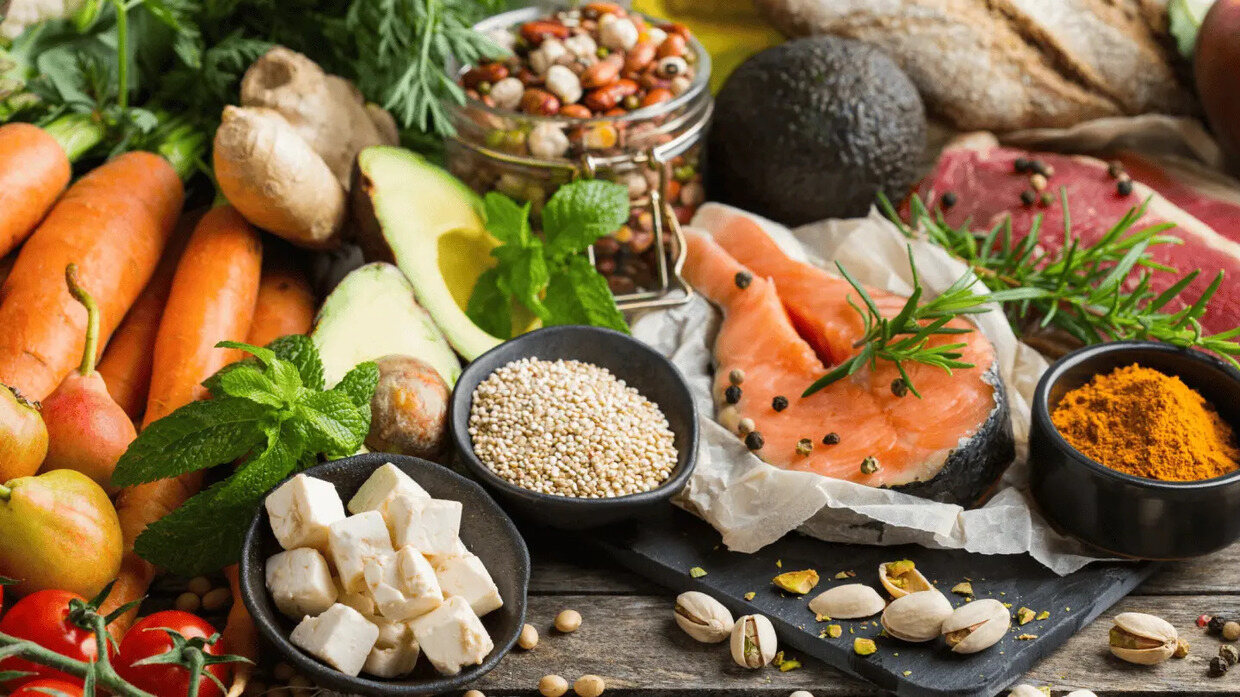
Protein is one clear example. It helps build tissue, supports muscle growth, and plays a role in enzymes and immune cells. Children can get protein from eggs, fish, poultry, tofu, beans, lentils, yogurt, milk, cheese, nuts, and seeds, depending on age and allergy risks. They do not need an adult-style high-protein diet, but they benefit from protein across meals and snacks.
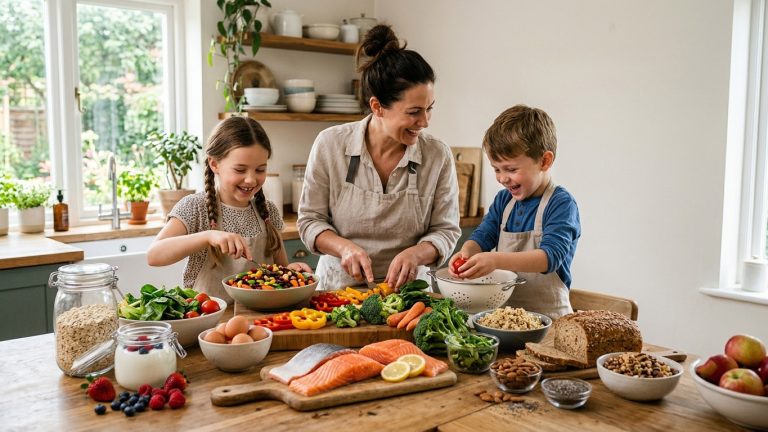
Healthy eating also depends on repetition. A child may reject steamed carrots once, then accept them later when served with rice, soup, or a favorite dip. Family meals that include vegetables, grains, protein, and healthy fats give children repeated chances to learn what balanced eating feels like. The same idea appears in healthy eating habits, where consistency matters more than one perfect day of food.
Brain development starts at the table
The brain grows rapidly in childhood, and it uses nutrients to support memory, attention, mood, and learning. Iron helps carry oxygen in the blood and supports cognitive development. Iodine supports thyroid function. Choline, found in eggs and some meats, contributes to nervous system function. Omega-3 fats, especially DHA from oily fish, support brain and eye development.
That does not mean every meal needs to be planned like a science project. Oats with milk, fruit, and nut butter can offer carbohydrates, protein, fat, fiber, and minerals. Rice with salmon, cucumber, and avocado provides energy, omega-3 fats, and micronutrients. Lentil soup with whole-grain toast gives iron, zinc, fiber, and slow-release carbohydrates.
The nutrients that often deserve extra attention
Different children have different needs, yet several nutrients often come up because they affect growth, energy, learning, or immunity. Parents can usually cover them through varied meals.
- Iron: Iron supports blood health and brain development. Sources include meat, fish, lentils, beans, tofu, spinach, fortified cereals, and eggs. Pair plant iron with vitamin C foods, such as oranges or tomatoes.
- Calcium and vitamin D: These support bones and teeth. Dairy, calcium-set tofu, fortified plant milks, sardines with bones, and leafy greens can help. Vitamin D can be harder to get from food alone.
- Omega-3 fats: Oily fish such as salmon, sardines, and mackerel provide DHA and EPA. Walnuts, chia seeds, flaxseeds, and soy foods provide ALA. These fats support brain, eye, and heart health.
- Zinc: Zinc supports growth, wound healing, taste, and immunity. It is found in meat, seafood, dairy, beans, nuts, seeds, and whole grains.
- Fiber: Fiber supports digestion, gut bacteria, and steady energy. Fruit, vegetables, oats, brown rice, whole-grain bread, beans, lentils, and seeds are practical sources.
Food, mood, and focus are closely linked
Many parents notice that meals affect behavior. Hunger can look like anger. A sweet snack without protein or fiber can leave a child energetic for a short period, then tired later. Sugar is not the enemy, but snack balance matters. Yogurt with fruit, toast with egg, hummus with pita, or a smoothie with milk and oats can feel more stable.
Brain-supportive eating is not limited to one superfood. It comes from a pattern of whole grains, colorful produce, protein-rich foods, and healthy fats. This same pattern overlaps with brain health foods, because the nutrients that support adults often matter for children too, in age-appropriate portions.
A colorful plate makes nutrition easier
Parents often ask what a balanced plate should look like. A useful starting point is a flexible mix: protein, carbohydrate, colorful produce, and a fat that helps with fullness and nutrient absorption. Portion sizes can shift with age, appetite, activity level, and growth stage.
| Plate part | Child-friendly examples | What it supports |
|---|---|---|
| Protein | Eggs, fish, tofu, beans, yogurt | Growth, repair, immunity, fullness |
| Carbohydrates | Rice, oats, potatoes, whole-grain bread | Energy, activity, concentration |
| Fruit and vegetables | Berries, bananas, carrots, spinach | Vitamins, minerals, fiber, antioxidants |
| Healthy fats | Avocado, olive oil, seeds, oily fish | Brain health, fullness, fat-soluble vitamins |
Immune health is built through daily patterns
No single food can prevent every cold, but nutrition can help the immune system work well. Children need enough energy, protein, zinc, vitamin A, vitamin C, vitamin D, iron, and selenium. A very restricted diet or too many sweetened drinks can leave less room for nutrient-rich foods.
Gut health also plays a role. The digestive tract contains a large share of the body’s immune activity, and fiber helps feed beneficial gut bacteria. Fermented foods such as yogurt with live cultures, kefir, tempeh, and some pickled vegetables can help families that enjoy them. For cautious eaters, start with familiar textures and small servings.
Sleep, outdoor play, hygiene, vaccination, and stress levels also affect immunity. Food works best as part of a wider lifestyle, not as a stand-alone shield. The World Health Organization notes that a healthy diet helps protect against malnutrition and noncommunicable diseases, which is a useful reminder that everyday meals have both short-term and long-term value.
Making family meals easier without lowering nutrition
Most families are not short on care. They are short on time, energy, and patience. Nutrition advice must work in real kitchens. A meal can be simple and still support development. Rice with egg and vegetables, pasta with tuna and peas, tofu stir-fry with noodles, chicken soup, or peanut butter toast with fruit can all help.
Planning helps, but it does not need to be complicated. Think in building blocks rather than recipes. Keep a few proteins ready, such as boiled eggs, canned beans, yogurt, tofu, or cooked chicken. Add rice, oats, bread, wraps, noodles, or potatoes. Keep fruit visible. Use frozen vegetables when fresh produce runs out.
Small habits that make a difference
- Serve water often, especially with meals and after active play.
- Offer vegetables in different forms, such as raw, roasted, blended, or added to soup.
- Keep snacks balanced by pairing carbohydrates with protein or fat.
- Let children help with simple tasks, like washing fruit or stirring batter.
- Avoid using dessert as the main reward for eating vegetables.
Picky eating needs patience, not panic
Picky eating is common in the toddler and preschool years. Children may reject foods because of texture, smell, color, temperature, or fear of the unfamiliar. Pressure often makes things harder. Forcing bites or bargaining can teach children to ignore hunger and fullness cues.
A calmer method is to decide what, when, and where food is served, then let the child decide how much to eat from what is offered. Keep at least one familiar food on the table. Add a small amount of something new without demanding a bite. Talk about food neutrally, such as “these carrots are crunchy.”
Some situations need professional support. If a child is losing weight, choking often, avoiding whole food groups, having ongoing digestive pain, or showing signs of nutrient deficiency, parents should speak with a pediatrician or registered dietitian.
Healthy growth is fed one meal at a time
Nutrition supports child development through ordinary moments. Oats before school, a lunchbox with fruit and protein, family dinner with vegetables on the side, and water after play all count. These choices help children grow stronger bodies, steadier energy, sharper focus, and more resilient immune systems.
The goal is not perfection. It is a pattern children can live with and learn from. When meals are varied, relaxed, and built around nourishing foods most of the time, children receive more than nutrients. They learn that food can be comforting, social, practical, and enjoyable.